Feeds:
Posts
Comments

2013 0615 IMG_1918. Coillards and scapesThe collards of spring are a buttery affair. Sweet and tender, they make a delicious pairing with garlic scapes and small spring onions, an infant version of a fall classic. Scapes, which are the stems of hardneck garlic, are plentiful now (over 200 in my garden alone!) and need to be harvested so that the plant’s energy will be directed to plump the bulbs. I first made this as a side dish and then served it with cooked dried beans (Rancho Gordo beauties) and whole wheat pasta for a complete meal.  I made the dish with prosciutto (our local gourmet deli sells the ends in chunks, which is very convenient) but you could leave that out to make it vegetarian.

For this recipe, I used 1 bunch of collards (10-12 leaves), 3 garlic scapes, 2 spring onions, and an ounce of prosciutto. The collard leaves were cut crosswise into ½-inch ribbons and the other ingredients were cut into ½-inch dice.

2013 0615 IMG_1909 Collards and scapesI always use collard stems, which cook until tender in a way that only really young kale stems will do.  Just slice the collard leaves from the stems, slice the leaves into ribbons and but the stems crosswise. The stems take longer to cook than the leaves, so I start them with the onions and garlic in most dishes. Here, as I said above, I chopped the stems into ¼-inch lengths and did the same with the scapes, onion and prosciutto. Placed in a wide pan slicked generously with olive oil, I let them cook over medium heat for a minute and then turned down the heat, covered the pan, and let the mixture steam-cook until barely crisp tender. This took under 5 minutes. I then added the collard leaf ribbons, covered the pan, and let the mixture cook slowly until everything is tender, about another 5 minutes. Add salt and liquid red pepper to taste. A little vinegar is also traditional.

For those who find long-cooked collards distasteful, this is a transformative tasting experience. I am fortunate to have access to such fresh and young produce, but even with more mature ingredients, this is a winner of a dinner.

2013 0612 IMG_9352 Asparagus and strawberriesStrawberries are the tomatoes of spring. Recently, they’ve been sliced and diced, pickled and pureed, and added to more dishes than I can count. I realized that their color and texture and juice are great complements to vegetables, salads, and even poultry. And since we harvest over a quart of the most delicious (though seedy) Chandler strawberries from our CSA every week, I have the luxury of experimentation that comes from excess. I love excess when it allows me to be inventive, not to sweat wasting something precious if the experiment flops.

The idea of combining asparagus and strawberries came to me in a different field. I went to a local farm to pick strawberries (since I was making jam and needed more than my CSA allotment) and discovered that they had a second pick-you-own asparagus patch, remote from the one I have been frequenting since May. I couldn’t resist picking both, despite having a refrigerator full of asparagus stalks destined for soup. After a month or so of steamed or boiled asparagus, we turn to other methods such as sprinkling them with olive oil and salt and roasting at 400 or more degrees until slightly charred. To perk them up, on went sliced strawberries. A great contrast that perfectly reflecting the season.

A cooking challenge organized by Meg of Grow and Resist and Briggs of Oh Briggsy in which we explore a featured cookbook each month.  The selection for May is Nigel Slater’s Tender, A Cook and his Vegetable Patch.

2013 0524 IMG_1580 Asparagus fava bean pilafNigel Slater is right to be poetic about his vegetable patch. He understands that obtaining vegetables from the places where they grow changes your relationship with food. It also changes your relationship with the earth. You’re immediately more aware of seasons and how local microclimate affects what grows and how well. This in turn informs the food that you prepare for yourself, your family, and your friends. And it affects your attitude, likely your health.  I personally think this is a big deal.  Many of us are extraordinarily fortunate to have choices to make about our food, and I am pretty clear on my priorities.

2013 0524 img_7336-r1-1 FavaI am devoted to the organic CSA farm we’ve belonged to for years, especially during months when we go to the fields and pick our own vegetables, fruits and flowers. It’s amazing, for example, to become lost in a forest of okra with beautiful creamy hibiscus-like flowers and prickly leaves and seeing how the small part we eat actually grows. I routinely make the rounds of local farms that sell their produce, whether fruit, vegetables, meat or eggs, and come to know the farmers as well as their livestock. Not to mention my penchant for stalking favorite farmers markets and pick-your-own farms, and foraging in woods and fields, or even my “lawn.”

Most of all, however, my kitchen garden is a daily source of sustenance, both physical and inspirational. As Nigel Slater says, the fruits and vegetable of the garden have “signaled an important, life-enhancing new order” in the kitchen so that “the delight in food (extends) far beyond what is on the plate.” That delight truly blossoms in your own garden. I’ve had a kitchen garden for as long as I can remember, certainly growing up in a rural area, and then improvising as I struck out on my own. Sometimes, my garden was a pot of herbs on a fire escape or, later, many pots in a courtyard. Other times it has been an ambitious conversion of a former lawn, and now it’s both, minus the fire escape. I grow enough quantity and variety to feed us sustainably, and since we use organic methods, we are restoring and regenerating our little plot. Bonus.

2013 0524 img_3901 herbs in potsI was therefore very excited when Nigel published Tender, a chronicle of his garden’s vegetables, and then a second chunky door-stopper of a volume, Ripe, which focuses on fruit. (You could retire your hand-held barbells with these guys.) Before this month’s challenge, I’d read every chapter of Tender, had focused on the accounts of his garden (which I covet) but had only casually dipped into his endless lists. I had barely read the recipes. I’m an avid fan of Nigel’s work. I faithfully read his online column in The Guardian, and keep Appetite, one of his previous books, within short reach. The premise of Appetite revolves around combinations of ingredients and techniques that give the cook self-confidence not to rely on recipes (even though his recipes are very instructive and delicious). It’s a treasure trove of ideas. And so is Tender.

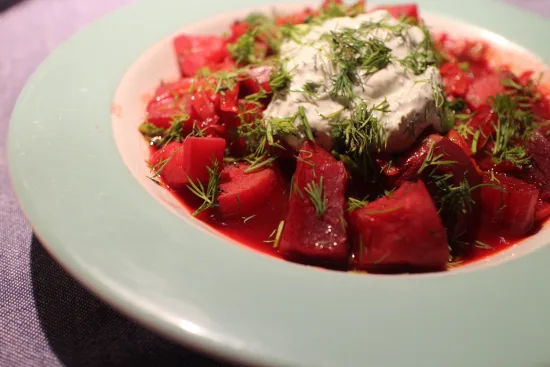
2013 0524 IMG_1806 Beets, cream cheese, bagelOnce I decided to “cook the book” (since that’s the point of this adventure), I first found myself consulting his lists in the sections of each vegetable chapter labeled “Seasoning…” and “And…” as well as the introductory narratives. So many good ideas! That’s how we ended up with sliced beets and cream cheese on a pumpernickel bagel. Really. And a salad of beets and apples sprinkled with walnut oil and nuts. (Page 043)  Same with chard braised in heavy cream with a tad of mustard. (Pages 181-182)

2013 0524 IMG_1699 Morningside kaleAs for the recipes, I opted to cook only what’s in season here, which is a little limiting in mid-May, but includes asparagus, fava beans, leeks, green onions, kale, chard, and herbs such as tarragon and mint, all from my garden or local farms. I also used storage beets from last season’s CSA harvest, which we just can’t seem to finish. Aargh.

Of the recipes, I first made Nigel’s delicious Pilaf of Asparagus, Fava Beans and Mint (Page 032), which includes a minty yogurt sauce that should not be omitted. The rice, rinsed three times before cooking, cooks up light and fluffy. The vaguely Indian spices, including cinnamon, cardamom and cumin, along with bay and thyme, provide an alluring backdrop that surprisingly complements the freshly cooked spring medley. I didn’t peel the fava beans since they were so tender, but you could. This rice dish is derived from a similar recipe in Appetite. He just added veggies for Tender.

2013 0524 IMG_1661 Mussel Leek ChowderA Chowder of Mussels and Leeks (Page 289) was outstanding. I share Nigel’s notion that onions have an awkward relationship with fish, and so leeks are more successful.  Based on the taste and texture of this chowder, there’s no doubt about it.  I drastically diminished the amount of bacon, butter and heavy cream in Nigel’s recipe, which improved it for my taste and waist. I thought that, throughout the book, there were more bacon, butter and cream ingredients than I would ever want.  Of the 29 chapters featuring individual vegetables, 20 used bacon, 24 used butter, 20 used heavy cream and 26 used cheese. Holy cholesterol. Despite that, I did make a version of Spring Leeks, Fava Beans and Bacon (Page 296) but cut down on the pig.

2013 0524 IMG_1674 Kale onions raisinsKale with Golden Raisins and Onions (Page 279) is a riff on a Mediterranean classic made with chard and also features blood oranges and capers, which I thought were terrific complements. I make kale salad with oranges all the time and the combination was as good hot as cold. I served this by itself, and also with whole-wheat pasta and chickpeas. I’m usually on a roll with Red Russian flat-leaved kale at this time of year because it overwinters in my garden under mounds of fall leaves and wakes up to produce big bushy plants with the most tender greens imaginable. They’re delicate and sweet like lettuce and have none of the leathery texture of mature plants. Sorry, Nigel, I think kale in July is just fine, and it lives in my garden year-round, as does chard.

2013 0524 IMG_1772 Pork and kaleAppetite contains one of my favorite Nigel Slater recipes, which he entitles “really, juicy spicy meatballs.”  Made with ground pork, bacon (ha!), lemongrass or lime leaves, garlic, hot peppers and cilantro, these little buggers fry up into the most delectable crusty morsels. Therefore, Chicken Broth with Pork and Kale (Page 281) was definitely on my list. No bacon in this one, thankfully, but plenty of hot chiles (from my garden, brought indoors in pots during winter), garlic, green onions (from the farmers’ market). I halved the meatballs in the recipe because we typically eat much less meat than others, and because I wanted some ground pork left over to make the meatballs from Appetite. Both were outstanding.

I know this is a ridiculously long post, but there’s one more observation I want to make about this book: it screams “Editor,” and “Market.”  A few years ago, I put together a book (on design not on cooking) that we shopped to publishers. The creative geniuses behind Mile End Cookbook were the producers and I loved every minute of working with them.  In meeting after meeting with editors and publishers, I got feedback like this: make a chunky book, or one that has an unusual proportion; combine personal stories with information; have “process” or “how to” sections; make lists; organize chronologically, alphabetically or seasonally but make inserts that break things up; use callouts; make it graphically interesting (more important for our book than this, but something I care about); and so on.  In Tender, there are also telltale editorial signs like must-have chapters on vegetables Nigel doesn’t grow successfully or at all. And recipes recycled from other books. What I’m saying is that Tender and Ripe feel contrived: hastily prepared crossovers between memoir and a hodge-podge instruction manual. I’m not disappointed, not at all. However, I am just not convinced that a personal encyclopedia of ideas that just pop into your head or your text or those of your editors, is a great genre. Nonetheless, as Jamie Oliver says on the cover of Appetite, “Nigel Slater is a genius.” His books have a permanent place on my favored shelves since they’re so chock full of great ideas and indomitable passion for food, gardening and quality of life.

2013 0518 IMG_1789 R1 Rhubarb bread puddingMy husband loves bread pudding so much that he orders it at restaurants. With bread that is starting to go stale, sweet or savory bread pudding is a great solution. Bread pudding is basically an egg and milk custard that wraps around cubes of bread and other ingredients, whether vegetables (leeks and asparagus were an option this week) or fruit (such as seasonal rhubarb). The bread can be present, as in this version, or can be rendered mushy to combine with the milk and eggs and create a batter.  

One of my favorite pairings with rhubarb is orange, zest for sure and juice when it makes sense. To get the most from zest, I crush it with sugar – using a mini-food processor or a mortar and pestle – which releases the aromatic oils in the peel. I also like a little whiff of cinnamon with rhubarb so I added a pinch of that too. Believe it or not, cinnamon complements the mixture and provides an alluring “back flavor.” Although I made this up on the fly, it turned out to be one of the most delicious bread puddings I’ve ever done.  Who knew?  

Rhubarb Bread Pudding

2 stalks rhubarb

½ c white granulated sugar (or raw cane sugar)

Zest of 1 orange (2-3 tsp)

¼ tsp ground cinnamon

Dab of butter

4 c cubed stale bread (3/4-inch pieces, without crust)

Optional: ¼ c chopped pecans

3 eggs

1½ c milk (nonfat is fine)

Optional: sugar crystals such as raw cane sugar to sprinkle on top

Heat the oven to 350 degrees. Clean the rhubarb and cut it into ½-inch pieces. Whiz the sugar and orange zest in a mini-processor or combine them using a mortar and pestle. Add the cinnamon and stir the mixture into the rhubarb. Set it aside for 5 minutes of so and stir to dissolve the sugar. (Do not let it exude a lot of juice since that will dilute the custard.) Butter a 2-quart ovenproof baking dish and add the rhubarb, the cubed bread, and nuts, if using. Lightly beat the eggs and add the milk. Pour over the bread and fruit mixture, pressing down lightly to make sure the top bread cubes are moistened.  Bake the pudding for 45-50 minutes, or until the custard is set. Halfway through, sprinkle on the sugar crystals, if using. Serve warm.

2013 0512 IMG_1733 asparagus fieldI love how seasonal vegetables connect us to the earth and how, when transformed in the kitchen and served on the communal table, they connect us to each other. Oh yes, there are lofty environmental and cultural goals in all of that. Fundamentally though, personal gratification starts with a one-on-one encounter with, let’s say, stalks of asparagus improbably sprouting from a sere landscape, rising miraculously, contradicting your visual instincts, but affirming what you knew all along: that life exists and can flourish in that previously barren place. That’s the promise of spring.

The asparagus field is disorienting to navigate.  The gray ground is strewn with decimated stalks of previous seasons, fallen into a wasteland that snaps slightly as you move through it.  While there are rows where you’re told to walk, familiar vertical cues are elusive. There are just a few tiny green shoots here and there, poking through the ground, ready to be snapped off and placed in your bucket.

2013 0516 IMG_1779 asparagus and eggWhen you get the asparagus home, trim the ends neatly on a slight diagonal and place the stalks in a bowl with shallow water, displayed like so many tulips. Treat them like flowers and they will stay fresh for days in the refrigerator, though eating them within hours of the harvest reveals a rich vegetable that bears little resemblance to the pale, dried-out store-bought variety.

For the first few weeks of the local season, we inevitably prepare the asparagus as simply as possible, eating it drizzled with olive oil and salt, or fresh butter and lemon juice. One of my favorite ways to serve asparagus – for brunch, lunch or a light supper – is to toss the cooked spears in melted butter in a wide pan, and sprinkle them with some freshly grated Parmesan until the cheese turns brown and crispy and creates a slight crust to the vegetables. Topped with a fried (or poached) egg and snipped tarragon, this is a surprisingly delicious combination of flavors and textures that belies its simplicity but is perfect for a light spring meal.

2013 0515 IMG_1748 Fava beans, leeks,radishesA cool spring day in the garden inspired a gathering of vegetables and herbs of the moment. We sat around communal bowls of freshly picked and simply prepared vegetables, one after the other. There were picturesque French breakfast radishes, tiny pungent scallions, plump stalks of asparagus with a sprinkling of olive oil and salt, rhubarb compote smeared on quinoa cakes, and this delectable medley of buttery fava beans, leeks, green garlic, crisp radishes and herbs.  We finally felt that the spring harvest had arrived.

At this time of year, you can eat the inner pods of fava beans, but here I chose to peel off the second shell. After shelling the beans from the long green pods they grow in, you plunge them in boiling water for less than a minute, shock them in cold water and pierce the pod just enough to be able to squeeze the bright green centers onto a plate. We prepared the favas as we were eating our successive plates of vegetables.

Slender spring leeks and green garlic that I thinned from our burgeoning patch were simmered in olive oil and a little water in a covered pan until they were softened. (When cooking leeks this way, it’s important not to let them brown since they can get tough and bitter. Better to brown them after they’re fully cooked if that’s the result you want.) I tossed in chopped tarragon and mint to the cooked leeks and green garlic and added more to the finished dish. By the way, bean-sized pieces of meaty smoked bacon are dynamite with this mixture of vegetables

2013 0512 IMG_1684 Leek aspagagus risottoWhat grows together goes together. Vegetables and herbs that are in season at the same time often make great companions. I especially like fresh French tarragon from my garden paired with asparagus or leeks. This risotto – put together quickly on a rainy Friday night – combined stock from last weekend’s roast chicken with fat end-of-winter leeks from the farmer’s market and fresh spring asparagus that I picked myself at a local farm.  It was a satisfying meal that offered the warm comfort still needed in mid-spring and introduced the fresh vegetables and herbs of the season.

2013 0512 IMG_1619 TarragonLeek and Asparagus Risotto with Tarragon

1 leek

Olive oil and/or butter (about 1 tbsp combined)

1 c Arborio rice

¼ c white wine

4-5 c chicken or vegetable stock

8 stalks asparagus

2 large sprigs tarragon, chopped, a few whole leaves reserved

¼ c grated Parmesan cheese (or to taste)

Salt to taste

Warm the stock or broth. Thoroughly clean the leek and cut the white and light green part lengthwise, then crosswise into slivers, Sauté the leek in the oil and/or butter over medium-low heat until it starts to turn translucent but do not let it brown. Add the rice and stir to coat, cooking until the surface of the grains turns white. Add the wine and stir to allow it to evaporate and also instill the ingredients with flavor. Add 1/3 cup of warm liquid, adjusting the heat to so that the liquid just simmers and stir until it is absorbed. When the liquid is absorbed, add another 1/3 cup, wait until it’s absorbed, stirring occasionally, and then repeat until the rice is tender but still al dente. This process will take about 20-25 minutes.

Meanwhile, cook the asparagus in boiling water until al dente. Drain and cut into 1-inch lengths. Add a little salt and a few sprinkles of olive oil

When the risotto is cooked, add the chopped tarragon and the asparagus and let it sit for a minute or so. Add the grated cheese, taste for salt and adjust as needed. Garnish with reserved tarragon leaves.

Serves 3-4.

Follow

Get every new post delivered to your Inbox.

Join 52 other followers